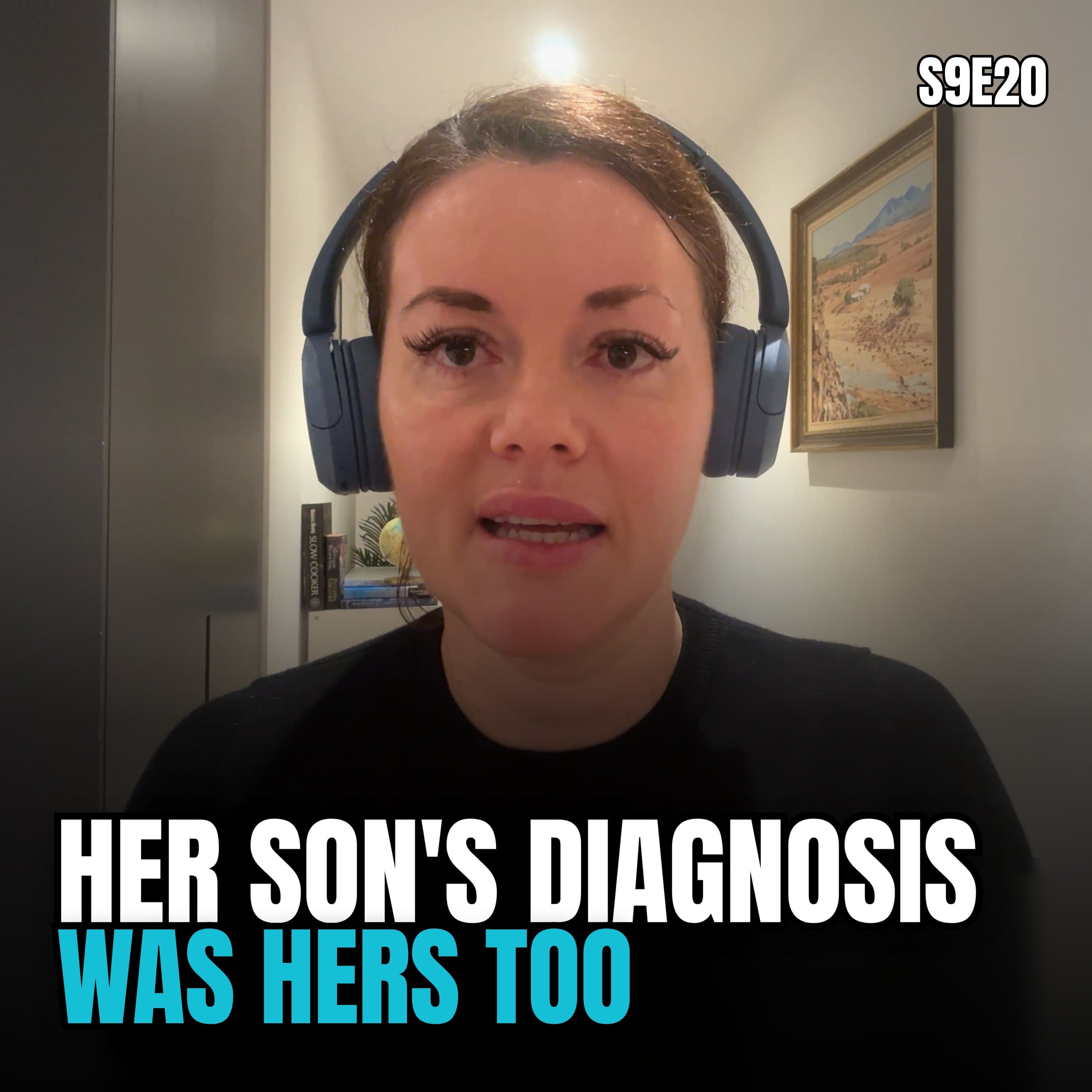
For ten years, registered dietitian Brittyn Coleman has been telling autism parents the same thing. If your child is a selective eater, a multivitamin is one of the most important tools in your toolkit while you work on expanding their diet. It is not the whole answer. It is not a substitute for food. But while you are doing the slow, careful work of adding new foods, a solid multivitamin can fill in the gaps and help your child feel their best.
And for ten years, parents have asked her the same question back. Which one should I buy?
For ten years, she did not have a great answer. The vitamins that pack in the most nutrition tend to taste terrible, which means a sensory-sensitive kid will refuse them on first contact and never go near them again. The vitamins that are tasteless and easy to take usually leave out the most important nutrients, or use forms the body cannot actually absorb well. Some pull entire B vitamins out of the formula because riboflavin happens to be yellow and yellow does not look pretty. Others mega-dose nutrients to look impressive on the label, ignoring that the kid is just going to pee most of it out.
So she finally built the one she had always wanted to recommend. It is called Best Part, and in this week's episode of The Autism Dad Podcast, Brittyn joins Rob Gorski to walk through why it took a decade to make, what is actually inside it, and the bigger conversation around supplements that every autism parent needs to hear.
The Vitamin That Did Not Exist
Brittyn is a registered dietitian who specializes in kids on the autism spectrum and neurodivergent kids more broadly. Her brother is autistic, and that lived experience is part of why her approach lands differently than most clinicians. She gets it. She is not quietly judging the parent whose kid is eating cold Little Caesars pizza for lunch. She knows that food is fuel and that a hungry, dysregulated kid in a classroom is not learning anything.
She also knows the math. A child eating five foods cannot get the same range of vitamins and minerals as a child eating fifty. And the foods that meet most kids' sensory needs — predictable, dry, often crunchy, often beige — tend to be the foods lowest in the nutrients that matter most for the developing brain and nervous system: zinc, iron, magnesium, the B vitamins.
So Brittyn partnered with Harkla, the company most autism families already know from their sensory swings and sensory tools, to build the supplement she had been telling parents she wished existed. Best Part is the result.
I finally was like, well, who's going to make this thing? Because somebody needs to. And finally I was like, it's me.
Why Sneaking Vitamins Into Food Almost Always Backfires
One of the most important parts of this conversation has nothing to do with the supplement at all. It has to do with what so many autism parents have been told to do for years, and why it is one of the riskiest things you can attempt with a sensory-sensitive child.
Brittyn shares a story from her early years as a dietitian. A young client whose entire diet was Hot Cheetos and Pediasure — only two foods, one of which was the only liquid he was getting nutrition from. His parents, doing what so many of us would do, decided to dissolve a multivitamin into the Pediasure to bridge the gap. He caught it. From that point on, he refused Pediasure entirely. They had not added a vitamin to his life. They had subtracted his most important food.
It got worse before it got better. To get him drinking Pediasure again, they had to crack a fresh bottle in front of him every single time. He had to hear the safety lid snap. He would not touch one that had already been opened. The trust took weeks of slow, careful work to rebuild — work that never should have had to happen in the first place.
Rob shares a parallel story about his middle son Emmett, a "super taster" who can identify almost anything hidden in a food. When Rob tried sneaking ingredients into homemade chicken noodle soup years ago and got caught, Emmett did not just refuse the soup that night. He never touched chicken noodle soup again, full stop. The contamination generalized to the whole food. One step forward, ten steps back.
Brittyn's point is not to shame any parent who has done this. We have all done it, or been tempted to. We were told to. The point is that sneaking is almost always a one-time win that creates a long-term loss, especially with neurodivergent kids who generalize and who rely on food being predictable and trustworthy. Best Part is built to be sensory-friendly enough that it does not need to be hidden in the first place — and the brand explicitly tells parents on the label not to mix it into a child's safe foods, with a link to a guided introduction approach instead.
I don't care how tasteless it is. Let's find a way that works and maintains trust with the kid, with food, and with you.
What's Actually In Best Part — and What's Intentionally Left Out
If you are listening to this and currently giving your child a multivitamin, Brittyn says you can pull yours off the shelf right now and check it against what she walks through in this episode. Here is the framework.
You want all four fat-soluble vitamins — A, D, E, and K — with vitamin D specifically as D3 and vitamin K as K2, the forms the body actually uses. You want all of the water-soluble vitamins — vitamin C and the full B complex: B1 (thiamine), B2 (riboflavin), B3 (niacin), B5, B6, B7 (biotin), B9 (folate), and B12. A surprising number of children's products skip B2 simply because it has a yellow tint that is harder to mask. That matters: B2 is critical to the methylation process, and dropping it leaves a real nutritional gap.
You want the minerals — zinc, manganese, magnesium — and you want them in chelated forms, which are easier on a child's stomach and more readily absorbed. The B vitamins should be in their methylated forms, meaning they are already activated and ready for the body to use, which means smaller, smarter doses can do more.
One thing that is intentionally not in Best Part: iron. Iron interferes with the absorption of other minerals, and crucially, an accidental overdose of iron — especially from a gummy a kid mistakes for candy — can be fatal. Best Part will be releasing a separate tasteless iron supplement designed to be taken at a different time of day, so parents who need to supplement iron can do it without compromising the absorption of everything else.
The whole product is also formulated to fill nutritional gaps without firehose dosing. Some children's vitamins on the market list 30,000% of the daily value for nutrients with no upper limit. Brittyn's view: that is not impressive, that is just expensive pee. And for kids sensitive to methylated B vitamins, those mega-doses can actually cause hyperactivity and dysregulation. Best Part stays well below upper limits while still hitting amounts that meaningfully move the needle.
Test Before You Supplement, When You Can
Brittyn and Rob spend a few minutes on something autism parents do not hear nearly enough: if you can run lab work, do it. Most pediatricians will only test iron and vitamin D, but a full micronutrient panel — usually through a private-pay specialty lab — gives you actual data on what your child is and is not deficient in. Rob shares his son Emmett's experience with a severe vitamin D deficiency that required a short, very high-dose course followed by maintenance dosing. None of that would have been targeted correctly without the test.
Brittyn is realistic about the limits, too. For a kid with a needle phobia or extreme sensory sensitivity, a blood draw is not always the right call, and a forced draw can cause its own trauma. The point is not that every family must test. The point is to stop assuming that "more supplements" is the same as "the right supplements." Best Part is designed as a strong baseline so parents are not flying blind, but if there is room to test and target, that is always the better path.
The Sensory and Sourcing Details Most Brands Skip
Best Part is a powder, on purpose. Gummies only work for a narrow slice of kids — the ones whose sensory profile happens to fit a chewy, sweet texture. A powder can be mixed into water, juice, smoothies, or however the child prefers, which means it can adapt to the kid instead of forcing the kid to adapt to it. It comes in two versions: an unflavored formula and a mixed berry flavored with organic raspberry powder and organic beetroot powder — no artificial dyes, no artificial colors, no artificial flavors.
Every batch is third-party tested for potency and for heavy metals and contaminants, and the certificates of analysis are downloadable from the website by lot number. That level of transparency is not the industry standard, and Brittyn is direct about why it should be — especially for a community of parents who are already exhausted from having to vet everything themselves.
More Than a Bottle on a Shelf
The thing that makes Best Part feel different is not actually the formulation, as good as it is. It is everything that comes around the formulation. Buy a multivitamin almost anywhere else and you are on your own from there. Best Part comes with a guide on how to introduce a new supplement to a selective eater without breaking trust, a video walkthrough from Brittyn herself, ongoing email tips for purchasers, and a customer support team that genuinely understands what families are dealing with.
The name itself carries that intention. Best Part is meant to mean two things at once: the best parts of every vitamin a kid actually needs, and the best part of parenting — the part that is supposed to be there underneath all the worry about whether your child is getting enough. Brittyn is upfront that Best Part is not the only path. She wants every parent who listens to this to walk away better equipped to evaluate whatever they are using right now, even if they never buy hers. That posture is what has always made her one of the most trusted voices in this space.
What we want is for parents to feel good about what they are doing — and get back to the best part of parenting.
What You Will Hear in This Episode
Why "picky eating" is the wrong word for what most autistic kids are actually experiencing
The real reason a five-food diet creates nutritional gaps a parent cannot close with food alone
Why sneaking supplements into a safe food is one of the highest-risk moves an autism parent can make — and the Pediasure story that proves it
What to look for on a children's multivitamin label, vitamin by vitamin and mineral by mineral
Why Best Part deliberately leaves iron out, and how to handle iron supplementation safely
Why mega-doses are usually a marketing choice, not a nutrition choice
When to push for lab work and when a strong baseline supplement is enough
How Brittyn partnered with Harkla to launch Best Part, and what makes the powder format different from gummies
Past Episodes With Brittyn Coleman
Resources Mentioned
Best Part — sensory-friendly multivitamin for selective eaters. Use code THEAUTISMDAD for 10% off your first order. Find them on Instagram at @bestpartkids.
Harkla — sensory swings and sensory tools, co-creator of Best Part. harkla.co
VizyPlan — vizyplan.com/app | use code theautismdad for first month free
About the Guest
Brittyn Coleman, MS, RDN/LD, CLT, is a registered dietitian and one of only a handful of clinicians in the country specializing in nutrition for kids on the autism spectrum and neurodivergent kids more broadly. Known online as The Autism Dietitian, she has spent over a decade helping families expand their child's limited diet in a sensory-friendly, no-pressure way so kids can get more nutrients in and feel their best while they grow. Her work is shaped by both her clinical training and her lived experience as the sister of an autistic brother. Brittyn is the co-creator of Best Part, a sensory-friendly multivitamin line built in partnership with Harkla.
About Your Host
Rob Gorski is the founder of The Autism Dad, a blog and podcast dedicated to supporting parents raising kids on the autism spectrum. As a dad of three autistic sons with over 25 years of experience, Rob brings lived experience, honesty, and heart to every conversation.
This Episode Is Brought to You By
If your mornings feel like a battle before the day even starts, I want to tell you about something that is genuinely changing that for families in our community. It is called VizyPlan, and it was built by a dad who gets it. The app uses AI to create visual routines with images of your actual child doing each step. Not stock photos. Not generic pictures. Your kid. Your home. Your routine. And it goes way beyond mornings. Calming tools, social stories, advocacy support, it is all in one place. A real autism playbook for life after diagnosis. Your family's photos and information stay private and protected. VizyPlan was built with that in mind from day one. When your child can see their day before they live it, everything shifts. Visit VizyPlan.com/app to learn more and download the app. Use the code theautismdad to get your first month free. See your day.
One More Thing
Rob's first book is coming. So Your Child Was Just Diagnosed with Autism: Real Talk, Support, and Next Steps from a Dad Who's Been There is everything he wishes he had when his sons were first diagnosed. Get updates and preorder information at theautismdad.com/book.
Find the Show
The Autism Dad Podcast is available on Apple Podcasts, Spotify, YouTube, and at listen.theautismdad.com. You can find Rob at theautismdad.com and on Facebook, Instagram, and TikTok at The Autism Dad.