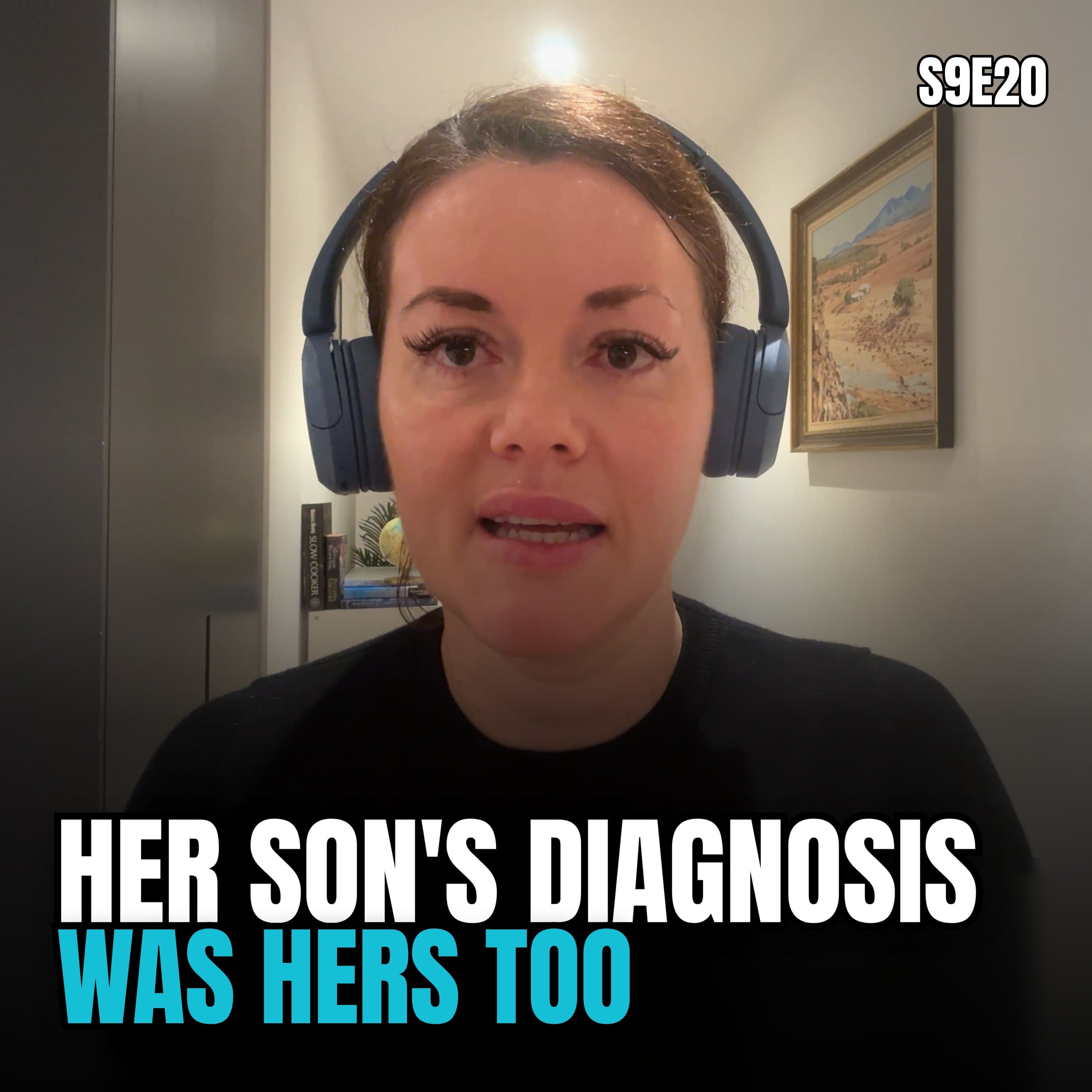
"Everything I knew about autism I learned from boys in the 90s because that's what the research was done on." That line from Erin Lamb is the whole episode.
Erin has been a speech language pathologist for 26 years. She runs a Baltimore nonprofit that's served families for nearly a century, including a state approved school for kids with autism and communication disorders. She has a Ph.D. in public policy. She is, by any measure, an expert. She still missed her own daughter's autism.
That's how girls get missed. The research was built on boys, the research shaped the training, and the training shaped what everybody pictures when they hear the word autism. Girls who talk early, who mask well, or whose struggles read as anxiety can get all the way to their teens before anyone says it out loud. If you missed it in your own kid, you're in very good company.
This is a Seen and Heard episode, so Erin gets the floor. She walks Rob through what a day actually looks like in a house with a kid in autistic burnout, with a PDA profile and ARFID, where separation anxiety is the most clinically significant thing in the room. She's honest about what it costs her. "People are like, what are you doing this weekend? And my answer is always caregiving. Because I do not know. I cannot plan."
She describes living permanently on call. "It's like I'm working in the ER as an ER doc. I'm just on call most of the time."
Then she tells us what changed. She calls it outsourcing the panic, and it's the most useful thing you'll hear this week. If the school professional isn't panicking, why is she? She handed the worry to the people whose job it is to worry, and her daughter started coming back to her within weeks.
She also gives the best description of an autistic kid this show has had. In the wrong environment, she says, it's like parenting all the kids from Willy Wonka at once, lots of screens, lots of sugar, everything needed right now. In the right one, with the right accommodations and supports, her kid is Charlie.
What you'll hear
Why a speech language pathologist with 26 years of practice missed autism in her own daughter
What a day really looks like with a kid in autistic burnout, a PDA profile, and ARFID
Separation anxiety as the most clinically significant thing in the room
What outsourcing the panic means, and how she started doing it
Who her daughter actually is: the Lorax, Willy Wonka, and Charlie
What she wishes the outside world understood about families like hers
What she wishes the autism community understood
What outsourcing the panic looks like in practice, on an ordinary week
"It's their job to worry about school. I'm gonna outsource the panic to them."
Erin Lamb
About the guest
Erin Lamb is the President and CEO of Gateway Maryland, the Baltimore nonprofit formerly known as HASA, which has served Maryland families for nearly 100 years. She's a licensed speech language pathologist, holds a Ph.D. in public policy, and is the mom of two neurodivergent teenage daughters. Gateway's work includes audiology, speech and occupational therapy, ASL interpreting, and the Gateway School, a K-8 campus approved by the Maryland State Department of Education for students with autism, developmental disabilities, and communication disorders.
About your host
Rob Gorski is the founder of The Autism Dad, a blog and podcast dedicated to supporting parents raising kids on the autism spectrum. As a dad of three autistic sons with over 25 years of experience, Rob brings lived experience, honesty, and heart to every conversation.
Rob's book, So Your Child Was Just Diagnosed with Autism, lands December 29, 2026 from Fair Winds Press. Updates and preorder: theautismdad.com/book
Sponsor
This episode is sponsored by Mightier, a biofeedback emotional-regulation gaming program for kids, developed and tested at Boston Children's Hospital. Kids wear a heart-rate monitor and play games that get harder when they get dysregulated and easier as they calm down, so they practice regulating themselves in the moment. Read Rob's full review at theautismdad.com/mightier-review and use code theautismdad22 for 10% off. #ad
Frequently asked questions
Why is autism missed in girls?
Because most of the foundational autism research was done on boys. As Erin puts it, everything she knew about autism she learned from boys in the 90s, because that's what the research was done on. That research shaped the training, the training shaped a generation of clinicians, and the picture of autism most people still carry around looks like a boy. Girls who talk early, who mask well, or whose struggles get read as anxiety often reach their teens before anyone says the word.
Can a speech language pathologist miss autism in her own child?
Yes, and Erin is the proof. She has 26 years of clinical practice, a Ph.D., and she runs an organization with a school for autistic kids. She still missed it at home. That isn't a failure of attention or love. It's what happens when the evidence base you were trained on didn't include kids like yours.
What is a PDA profile in autism?
PDA stands for pathological demand avoidance. It describes an autistic person whose nervous system treats demands as threats, even small ones, even pleasant ones. Approaches that add pressure tend to make it worse, which is why so much standard advice backfires. Erin's daughter has a PDA profile, and it shapes how the whole house runs.
What is ARFID?
ARFID is avoidant restrictive food intake disorder, and it's more than picky eating. A kid with ARFID may avoid whole categories of food because of texture, smell, or fear, to the point that nutrition and growth are affected. It shows up often in autistic kids, and it isn't something a child grows out of by being pushed.
What is autistic burnout?
Autistic burnout is what follows a long stretch of masking, sensory overload, and needs that never got met. It looks like exhaustion, the loss of skills a kid used to have, and a much lower tolerance for demands. It isn't laziness and it isn't a choice. Recovery takes fewer demands and real rest, not more pushing.
What does outsourcing the panic mean?
It's Erin's strategy for staying upright. Instead of carrying every worry herself, she hands specific worries to the professionals whose job it is to hold them. If the school isn't panicking about school, she doesn't have to either. She called up her daughter's school contact and asked her to say when it was time to panic, and once she stopped absorbing everyone else's anxiety, her daughter started coming back to her within weeks.
Resources mentioned
Gateway Maryland (formerly HASA), Baltimore: gatewaymaryland.org
Rob's full Mightier review: theautismdad.com/mightier-review
More Seen and Heard episodes: listen.theautismdad.com
Preorder Rob's book: theautismdad.com/book
If you found this episode helpful, please follow The Autism Dad Podcast on Apple Podcasts, Spotify, or wherever you listen. Visit listen.theautismdad.com for past episodes, resources, and ways to support the show.
You can find Rob at theautismdad.com, on Facebook, Instagram, and TikTok at The Autism Dad, and on YouTube at The Autism Dad. New episodes drop every week at listen.theautismdad.com.