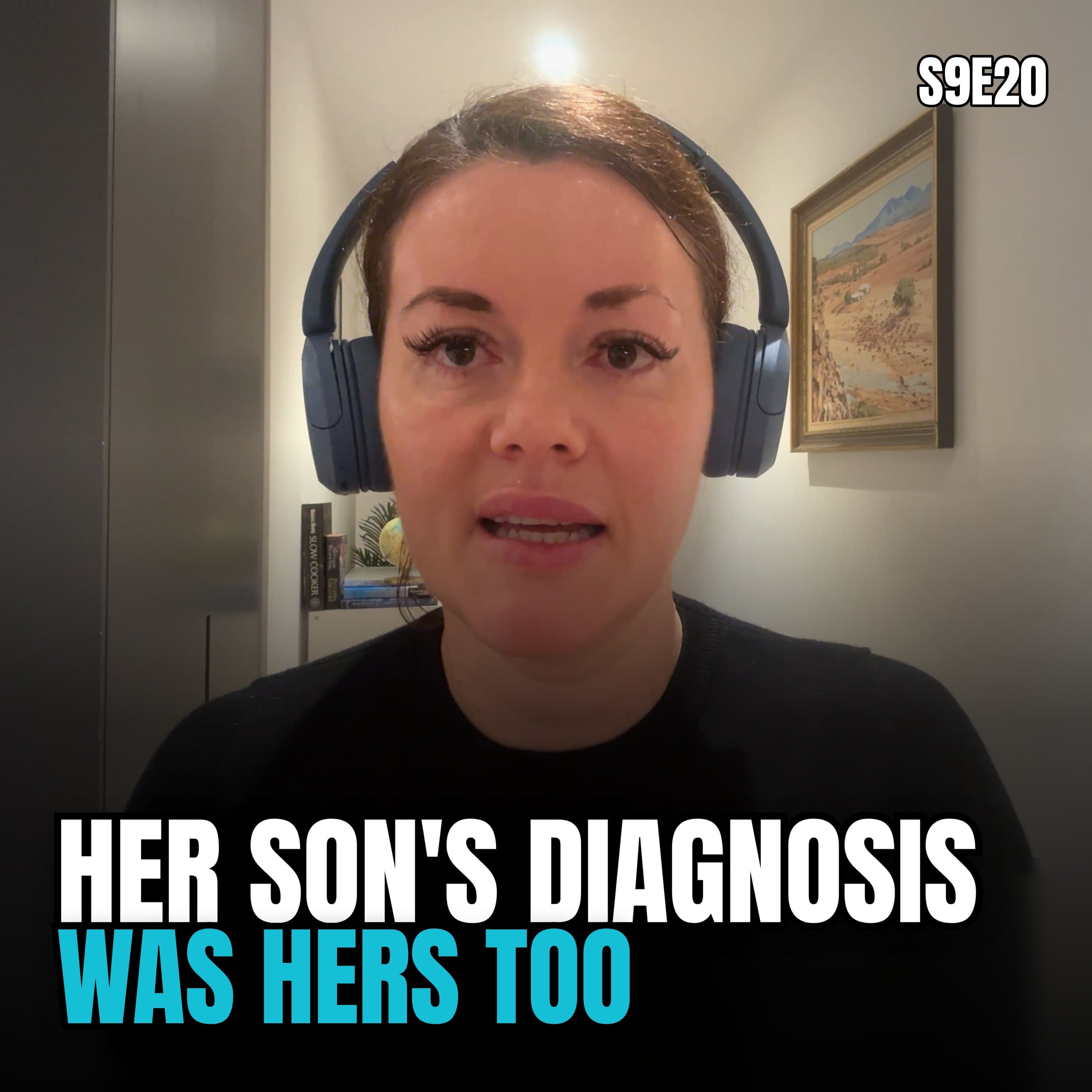
In 1988, Jaime and Tracy Parent were stationed in England when their two year old son Bryan was diagnosed with autism. They went looking for resources and found almost nothing.
"In the early days 1988, when Bryan was diagnosed, there was nothing out there. We found that families are our best resource and continued to be our best resource today."
Jaime is a retired Air Force lieutenant colonel. Twenty years in the Biomedical Services Corps, and a family that moved every three years. He and Tracy wrote The Mission at Home, the book they wish had existed for them, because back in 1988 other families carried them and they promised each other they would return the favor when it was their turn.
This episode is presented by Mightier. Details at the bottom of the post.
There was nothing out there, and no Rain Man yet
It is hard to explain to a parent diagnosed in the last ten years what 1988 actually felt like. Jaime does it in one line.
"It was before anything. It was before Rain Man. It was before any type of media presence."
No awareness campaigns. No Facebook groups. No search bar. And they were overseas, which took even the thin local options off the table. So they did the only thing available. They called ahead to families at the next duty station and asked what it was actually like there.
Today he says there is a ton out there, and he is careful about it. Some of it is good. Some of it, quite frankly, is not.
Every three years, start over
This is the part civilians tend to underestimate. A military family moves roughly every three years, and for a family with a disabled child, every move resets the entire support system to zero.
"Wherever we seemed to move, we had to start over. We had to find the right doctors. We had to find the right teachers. We had to find the right housing. We had to do a lot of groundwork and somewhat guesswork to say, hey, we need to live in this particular house because it's with this particular county and they have the best services that we're looking for."
Read that again. They picked houses by school district services, sight unseen, from another country, with incomplete information, on a three year clock. Then they did it again. And again.
Jaime calls the constant reinventing the biggest hurdle they faced. Not the diagnosis. The starting over.
The biggest win of their lives was a loss
Ask him about a win and he goes straight to wrestling.
Bryan was a student at Oakland Mills High School in Maryland when he got invited to the Orange Crush Club. The wrestling coach was also his special education teacher, and he took a chance on Bryan. What matters is what came next.
"There were no shortcuts. There were no easy paths. Bryan had to follow the same type of regimen that the other wrestlers did, and he was dedicated."
He made the team on his own. He wrestled heavyweight at over 218 pounds. He won matches. He went to regionals, then states, then the national program in North Dakota with his coach and his team.
And the first time his father watched him wrestle, Bryan lost.
"Bryan got pinned in probably about 30 seconds. But to me that was one of the biggest wins of his life and ours. When we saw Bryan actually involved, actually included, wrestling at the high school level with all the other wrestlers who had embraced him, who had worked with him, who had made him successful, and he helped make the team successful."
Thirty seconds. Pinned. Biggest win of their lives. If you have ever tried to explain to someone why your kid's scoreboard is different, this is the whole thing in one story.
A job, a car, and a checkbook
Bryan spent thirty days in a residency program at UCLA. At the end of it, the Parents sat in a room full of clinicians who asked what their goals for their son were.
"We would like them to have a job, drive a car and balance a checkbook."
Modest. Ordinary. The kind of life most people never think to name as a goal because they assume it.
"The looks on their faces was one of just extreme pity. As if, well, none of that's really going to happen. You poor delusional people."
Bryan is an adult now. He has a job he is good at, at Publix. He lives at home. He competes in Special Olympics bowling, soccer, and basketball, and he was headed to the state games in Orlando.
Jaime's answer to what he wishes the outside world understood is not complicated.
"People with autism want the exact same thing that you and I want, and there's no reason why they shouldn't be able to have those things."
Big boulders, and the angels behind them
Asked whether the world outside the autism community actually gets it, he says no, there is still work to do, and he names the specific obstacle: bureaucracy at every level, local, state, and federal, running on archaic laws and sometimes archaic minds behind those laws.
But he does not stop at the complaint, and this is the part worth holding onto.
"Once you get past some of that bureaucracy, you will find what I just call angels. People that are along the way that do get it, that whatever organization they are working for, they do get it. They go one on one and they will help you within the bureaucracy as best they can."
"There's a lot of big boulders out there, but if you get past them, you'll find help."
He would know. He spent a career inside a very large bureaucracy himself.
Don't become a wallflower
His advice to other autism families is four words long.
"Don't become a wallflower. Reach out to other families that are similar to yours."
And he means similar loosely. When the Parents were looking for support, they did not go hunting for another family with a two year old. They understood autism was a lifetime thing, so a family further down the road had wisdom worth having.
"You can go to psychiatrists, psychologists and counselors and all that. But families are your friends, and families will help you build the community that perhaps you're looking for."
Special Olympics has been a big part of that for them. Not just for Bryan, but for Tracy and Jaime, because that is where they meet other families across every kind of disability and find the instant bond that comes from a familiar struggle. They still have family friends from Maryland going back twenty years who matter to them and to Bryan.
Autism does not end with your military service
If you are a service member reading this, this is the line he wanted on the record.
"Autism does not end with your military service. It goes on and on and on, and you need to have a life plan after military service, probably before you get out, to plan those things, to make sure that your child is going to be cared for for the rest of your life, and perhaps even beyond that."
That is the gap The Mission at Home was written to fill. He expected to write a 200 page book. It came out at 335 pages, because once he started listing what a family actually needs to sort out, it kept going. Social Security. Financial plans. Obscure benefits available through Social Security and through veterans resources. Wills and living wills. Housing.
Housing is the one thing they still have not solved for Bryan, and Jaime says so plainly. They solved most of the financial pressure. Housing is still open.
About Jaime Parent
Jaime B. Parent is a retired United States Air Force lieutenant colonel who served more than twenty years in the Biomedical Services Corps. He and his wife, Elizabeth "Tracy" Parent, a special education behavioral specialist with more than twenty years supporting autistic and neurodivergent students, are the coauthors of The Mission at Home: Navigating Military Assignments, TRICARE, Education, Benefits, and Everyday Life with Your Child on the Autism Spectrum. They live in South Florida, where they also care for aging relatives, and their son Bryan lives with them.
The Mission at Home is available on Amazon, Barnes and Noble, and other online retailers.
This episode is presented by Mightier
Mightier is a biofeedback video game program developed and tested at Boston Children's Hospital. Your kid wears a heart rate monitor and plays games that get harder when they get dysregulated and easier when they calm down. So instead of being told to take a deep breath in the middle of a meltdown, they practice regulation in their own body, at a moment when they can actually feel it working.
It is one of the very few things I have stood behind for years, because it genuinely helped my own kids connect the dots when nothing else did.
Visit mightier.com and use code theautismdad22 for 10% off.
This episode is sponsored. I only work with companies I would point a friend toward.
My book
So Your Child Was Just Diagnosed with Autism: Real Talk, Support, and Next Steps from a Dad Who's Been There is out December 29, 2026 from Fair Winds Press. If your child has just been diagnosed, this is your compassionate first step guide from someone who has lived it. Preorder here.