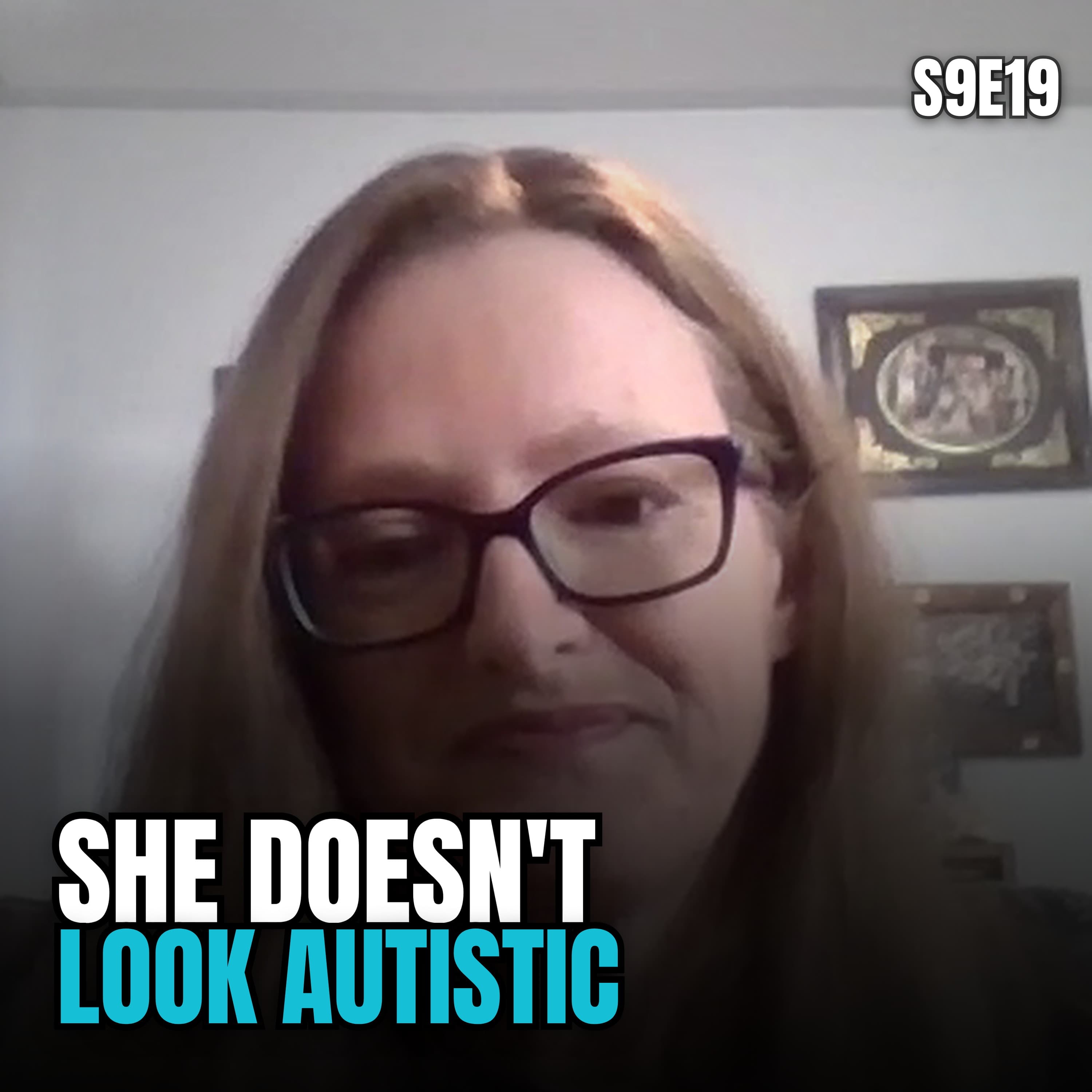
Caroline Warnes had no idea until her 40s. Her son was going through his diagnosis, autism and ADHD together, and somewhere in the middle of all those appointments a few bells started ringing for her too.
"When I was growing up, girls in particular didn't get diagnosed with autism or ADHD. It was just not a thing."
Caroline lives in Sydney, Australia. It's just her and her son, a tiny little family, and she's a writer who works for herself. Her son was diagnosed early in his school years with level two autism and moderate ADHD, the combination a lot of families now call AuDHD. This is a Seen and Heard conversation, so it's short, and it's about what life looks like in one house when both people in it are figuring out their brains at the same time.
This episode is presented by Mightier. Details at the bottom of the post.
The twinsy diagnoses
Caroline doesn't think her story is all that unusual for parents her age, and I think she's right. A lot of us grew up when the picture of autism was narrow, and it rarely included girls.
"So I had no idea until my 40s that this was what was going on."
She and her son ended up with their diagnoses at about the same time. She has a name for that.
"So we kind of got the twinsy diagnoses at the same time, both of us, which in a way it was helpful because it meant I could go through the journey with him. And we've learned a lot about ourselves together."
That second sentence is the one I keep coming back to. When it's your kid's diagnosis, it's easy to feel like you're standing outside of it, managing it. Caroline got to walk through it with him, and the work since then has been building a life around what the two of them actually need.
"Having to recreate our lives into something that works for us as neurodivergent people, because the real world can be very hard if you're trying to fit yourself into it."
A day that runs on routine
I asked what a typical day looks like, and the answer is structure. Not rigid, she's clear about that, but there's a time to get dressed and a time to put shoes on, and there's still plenty of prodding to make it happen.
"Minus those routines, things just don't really work for us."
And it isn't only for her son. Caroline is very routine driven herself. The hardest part for both of them is the social side.
"We don't like lots of people around. We don't like lots of noise or movement. We're both very noise sensitive, so it kind of eliminates a lot of big crowded type situations."
So their weekends stay small. They see friends in smaller groups and spend time with family, and they skip the jam-packed calendar a lot of families think they're supposed to keep. That schedule doesn't work for either of them, in energy or in sensory needs, and she doesn't pretend otherwise. There's a lot of permission in that for parents who are still trying to force the busy version.
The win: finally settled in Sydney
Ask Caroline about a recent win and she talks about home.
Around the time of their diagnoses she was doing a lot of soul searching, and they moved a lot. Different states, different houses. She didn't know it then, but looking back she sees the ADHD needing a constantly new environment.
"I'd go, okay, novelty's worn off. I'm not feeling it, let's move again."
About a year before we recorded, they moved back to Sydney, where she grew up and where her son was born.
"I actually feel for the first time settled in a long time. And I think my son does too, because I'm settled. So he matches my energy a lot."
That last line is worth sitting with. We spend so much energy trying to regulate our kids from the outside. Sometimes the most regulating thing in the house is a parent who's finally settled.
A little engineer's brain, raised by a writer
Caroline describes her son as the classic invisible disability. He's a really intelligent kid. He loves maths and numbers, and early on he was obsessed with tall buildings and anything that involved engineering and putting things together. She says he has a little engineer's brain.
The harder side for him is communication.
"Where he has a few more challenges apart from the social skills is around things like creative expression and reading and communication and that sort of thing, which is ironic because I'm actually a writer."
He had a speech delay when he was younger and did a lot of speech therapy. These days they go to social skills groups, because as an only child it's hard for him to build those interactions with other kids.
What she wishes the world understood
The last few questions are the heart of this series. What do you wish the outside world understood, and does it actually see and hear your family? Caroline's answer starts with stigma, and not where you'd expect it.
"I still see and bump up against the stigmas around some of it."
It isn't coming from the kids. It's coming from adults her age. She sees kids close to her who might need an assessment, and what's standing in the way is the picture their parents still carry around.
"They still think, unless you're sitting in the corner rocking back and forth and flapping your hands, that that's what autism looks like. And it doesn't."
She knows better than most what that old picture costs.
"So many girls were missed when I was growing up. And even today, I think they would probably still tend to get diagnosed later."
Her answer to it isn't complicated.
"I think there needs to be more education and understanding around what autism really looks like rather than the perception of what we thought it looks like when I was growing up or even 10 years ago."
A school pickup or a job
Does the world at large see and hear her family? Yes and no. She moves in circles where people understand, partly by choice. Where she struggled most was work.
"I think people pay a lot of lip service to being yourself and inclusion and flexibility, but I still don't know if that really exists in most workplaces."
"It's really hard to parent an autistic child and work as well in Australia at least."
Her son couldn't do after-school care. His separation anxiety was too much, so that option was off the table, and it all came down to one sentence.
"It was literally a choice of I can either pick my child up from school or have a job, but I can't do both."
She works for herself now. If you made that same choice, or you're making it right now, it isn't a personal failing. It's a gap in how most workplaces are built.
It's not a competition
Turned toward the autism community itself, her answer is gentler. She doesn't run into it much, but she knows it's out there. The comparing. A family with a level three kid hinting that a level two family doesn't really know hard.
"At the end of the day, it's not a competition. It's kind of like challenges are unique to every family."
That comparison doesn't help anybody on either end of it.
Visibility
Does she feel seen and heard by the autism community? Yes, and she credits the people who spoke up early and made themselves visible. She was kind enough to put me in that group.
"I think visibility is most of the challenge. It's just getting people to see and then have the confidence to speak up themselves."
That's what she's doing now. She talks more about who she is and who her son is, and she feels confident doing it, because she trusts the community to accept them.
One size doesn't fit all
I closed by saying what this series is for. It's here to close some of the disconnects in our community and in the world around us, and to help people understand what the levels actually mean, because they're super confusing. Two people can carry the same label and be completely different people. Everybody experiences autism in their own way.
Caroline put it simply. It's a very broad spectrum, and everyone looks completely different. Then she said the line I'd hand to any parent standing where she stood in her 40s.
"I'm just grateful that we went through the process and understand who we are now because life was super challenging before we had that information."
If you started recognizing yourself while your child was being evaluated, you're not alone, and you're not too late. Caroline found her answers in her 40s, right alongside her son, and they're building a life that fits them both.
About Caroline Warnes
Caroline Warnes lives in Sydney, Australia, with her son. He was nine and in year four when we recorded, diagnosed early in his school years with level two autism and moderate ADHD. Caroline found answers about her own neurodivergence in her 40s, around the same time as her son's diagnosis, and the two of them have been learning about themselves together ever since. She's a writer and works for herself. After years of moving between Australian states, they moved back to Sydney, where she grew up and where her son was born.
This episode is presented by Mightier
Mightier is a biofeedback video game program developed and tested at Boston Children's Hospital. Your kid wears a heart rate monitor and plays games that get harder when they get dysregulated and easier when they calm down. So instead of being told to take a deep breath in the middle of a meltdown, they practice regulation in their own body, at a moment when they can actually feel it working.
It's one of the very few things I've stood behind for years, because it helped my boys connect the dots when nothing else did.
Visit mightier.com and use code theautismdad22 for 10% off.
This episode is sponsored. I only work with companies I'd point a friend toward.
My book
So Your Child Was Just Diagnosed with Autism: Real Talk, Support, and Next Steps from a Dad Who's Been There is out December 29, 2026 from Fair Winds Press. If your child was just diagnosed, this is your compassionate first step guide from someone who's lived it. Preorder here.